Nation‑State account hijacks rise; supply‑chain AI threats expand 🚨. Strengthen cloud and CI/CD defenses 📊

Good morning, March 25 2026 – here’s the latest intelligence you need to act on.
Today's headlines
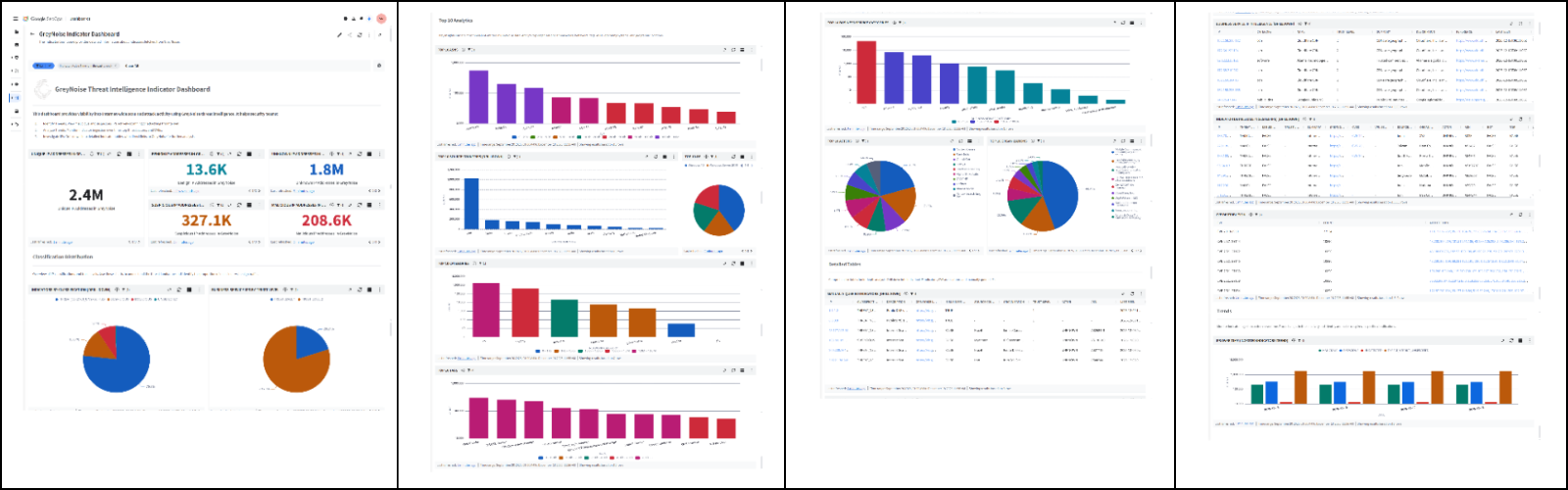
- GreyNoise now feeds real‑time blocklists into Google SecOps.
- CanisterWorm wiper campaign intensifies against Iranian targets.
- TeamPCP injects malicious code into popular Python AI library via CI/CD.
- FBI and CISA alert on Russian hijacking of Signal and WhatsApp accounts.
- Cloudflare adds email‑risk tiers to block abusive account creation.
1️⃣ GreyNoise integrates with Google SecOps to enrich threat detection
Key Points:
- Real‑time blocklists auto‑populate Google SecOps dashboards.
- Noise reduction improves SOC alert triage by up to 30%.
- Adds context on malicious IP activity for incident investigations.
Description:
GreyNoise announced native integration with Google SecOps, allowing security teams to ingest fully configurable, real‑time blocklists directly into their workflow. The partnership automates the suppression of low‑signal internet scanner traffic while highlighting IPs that are actively exploiting known vulnerabilities. Administrators can also enrich alerts with historical malicious activity data.
Why It Matters:
By cutting through background noise, organizations can allocate analyst time to genuine threats, accelerating response and reducing false‑positive fatigue. The integration also strengthens visibility into supply‑chain and external attack surfaces that are otherwise difficult to monitor through traditional SIEMs.
2️⃣ CanisterWorm wiper campaign targets Iranian organizations
Key Points:
- Wiper overwrites critical system files on Windows and Linux hosts.
- Payload delivered via malicious Microsoft Office documents.
- Attribution points to an Iran‑aligned threat group.
Description:
KrebsOnSecurity reported that the CanisterWorm wiper has resurfaced, focusing on governmental and industrial entities in Iran. The malware employs a multi‑stage infection chain, beginning with a phishing attachment that exploits macro execution, followed by a destructive payload that corrupts boot sectors and file systems, rendering systems inoperable.
Why It Matters:
The resurfaced wiper highlights the persistent risk of destructive malware used in geopolitical conflicts. Organizations with assets in or serving the region must revisit backup integrity, segment critical infrastructure, and enforce strict macro controls to mitigate potential operational disruption.
3️⃣ OWASP retires its Meetup platform, shifting community engagement
Key Points:
- Meetup service decommissioned after three years of low participation.
- Focus moves to virtual events and the new OWASP Community Hub.
- Resources and archived content migrated to GitHub.
Description:
The OWASP Foundation announced the retirement of its dedicated Meetup platform, citing declining usage and the rise of alternative virtual collaboration tools. The organization is consolidating community activities onto a centralized OWASP Community Hub, which will host webinars, working group sessions, and discussion forums.
Why It Matters:
For security professionals, the transition means a single, more accessible venue for knowledge exchange, reducing fragmentation of open‑source security discussions. Consolidated resources also improve discoverability of vulnerability disclosures and best‑practice guidance crucial for compliance programs.
4️⃣ Russian actors hijack Signal and WhatsApp accounts, warns FBI and CISA
Key Points:
- SIM‑swap and social engineering used to seize control of messaging accounts.
- Targets include journalists, activists, and corporate executives.
- Advisories recommend multi‑factor authentication and carrier alerts.
Description:
The FBI and CISA issued a joint advisory detailing a campaign by Russian‑backed threat actors that hijack Signal and WhatsApp accounts through SIM‑swap attacks and phishing. Compromised accounts are leveraged for espionage, credential harvesting, and propagation of further malicious links.
Why It Matters:
Messaging platforms are increasingly used for sensitive communications. Organizations must enforce MFA, monitor for anomalous SIM changes, and educate users on the risks of social‑engineering to protect confidentiality and prevent data exfiltration.
5️⃣ TeamPCP injects backdoors into LiteLLM via compromised Trivy CI/CD pipeline
Key Points:
- Malicious litellm 1.82.7 and 1.82.8 published on PyPI.
- Backdoor includes credential harvester and Kubernetes lateral‑movement toolkit.
- Versions removed after coordinated disclosure with PyPI.
Description:
Security researchers uncovered that threat actor TeamPCP compromised the Trivy CI/CD workflow used by the litellm Python package. Two malicious releases were pushed to PyPI, embedding a credential harvester and a toolkit designed for lateral movement within Kubernetes clusters. The backdoored packages were quickly removed following coordinated notification.
Why It Matters:
The incident underscores the supply‑chain risk inherent in open‑source automation pipelines. Organizations should implement strict provenance checks, enforce signed packages, and monitor for unexpected changes in critical dependencies used in AI/ML workloads.
6️⃣ Student loan provider breach exposes 2.5 million borrower records

Key Points:
- Personal data including SSNs and financial details leaked.
- Attack vector traced to unpatched web application server.
- Regulators have opened investigations under data‑protection statutes.
Description:
ThreatPost reported a breach at a major student loan servicer that resulted in the exposure of 2.5 million borrowers' personal and financial information. The attackers exploited a known vulnerability in the provider’s web portal, gaining unauthorized database access and exfiltrating sensitive records before detection.
Why It Matters:
The breach highlights the criticality of timely patch management and the need for robust encryption of PII at rest. Financial services and educational institutions must reassess their vulnerability management programs to avoid costly regulatory penalties and reputational damage.
7️⃣ OpenClaw research reveals AI‑driven reverse shells and semantic worms

Key Points:
- Demonstrates how large‑language models generate functional reverse shells.
- Semantic worms adjust behavior based on host environment analysis.
- Calls for updated detection signatures that consider AI‑generated code.
Description:
VirusTotal’s research blog published a deep dive into how the OpenClaw AI framework can automatically generate reverse shells, semantic worms, and cognitive rootkits. By leveraging language models, the tool crafts payloads that adapt to target system characteristics, reducing reliance on static binaries.
Why It Matters:
AI‑generated malware presents a moving target for traditional signature‑based defenses. Security teams must augment detection with behavioral analytics and monitor for anomalous code generation activities in development pipelines.
8️⃣ ISC Stormcast flags surge in SSH/Telnet scans and emerging port traffic
Key Points:
- SSH (22) and Telnet (23) scan volumes up 42% week over week.
- New activity observed on uncommon ports 8443 and 9389.
- Recommendations include geo‑blocking and rate‑limiting for exposed services.
Description:
The Internet Storm Center’s daily Stormcast for March 25 2026 reported a notable increase in scanning activity targeting SSH and Telnet services, alongside emerging traffic on previously quiet ports. The spikes are attributed to opportunistic actors searching for misconfigured devices.
Why It Matters:
Elevated scanning indicates heightened reconnaissance that often precedes credential‑stuffing or ransomware campaigns. Organizations should enforce strict access controls, disable legacy services, and implement intrusion‑prevention rules to reduce exposure.
9️⃣ Cloudflare launches Account Abuse Protection with email risk tiers

Key Points:
- Analyzes email patterns to assign low, medium, high risk scores.
- Customers can embed risk tiers into firewall and bot‑management policies.
- Aims to curb fraudulent account creation by bots and credential‑stuffers.
Description:
Cloudflare introduced a new Account Abuse Protection feature that evaluates incoming email addresses for risk based on domain reputation, syntax, and historical abuse. The system outputs risk tiers that can be directly referenced in Cloudflare’s firewall rules to block or challenge suspicious sign‑ups.
Why It Matters:
Automated account abuse drives credential stuffing and phishing campaigns. By integrating risk‑based email scoring, enterprises can reduce fraudulent onboarding, protect user data, and lower downstream security incident costs.
🔟 CEO Apple ID phishing scam highlights deep‑fake credential harvesting

Key Points:
- Spear‑phishing email mimicked a known executive contact.
- Link led to a cloned Apple ID login page extracting MFA codes.
- Victim’s device was later compromised with a covert surveillance payload.
Description:
Smashing Security detailed a sophisticated phishing operation that targeted a technology CEO’s Apple ID. The attackers used a convincingly forged email and a cloned login portal to harvest credentials and MFA tokens, subsequently installing a stealthy surveillance tool on the victim’s device.
Why It Matters:
Executive accounts are high‑value targets for espionage. The incident demonstrates the need for rigorous verification of communication channels, use of hardware‑based MFA, and continuous monitoring for anomalous login behaviors.
Stay vigilant and keep your defenses aligned with the evolving threat landscape.

Member discussion