Attack Sophistication Escalates Across Infrastructure and AI. Supply‑Chain Vulnerabilities Surge Again 🚀🔐
7Secure IssueAttack Sophistication Escalates Across Infrastructure and AI. Supply‑Chain Vulnerabilities Surge Again 🚀🔐Edited by 7Secure
Apr 3, 2026Cybersecurity IntelligenceDaily briefing for security teams, leaders, and analysts.
April 3, 2026 – Welcome to today’s cyber risk briefing.
In today's 7Secure briefing:
- IP reputation systems falter against rapid address rotation.
- CanisterWorm wiper threatens Iranian critical networks.
- Apple extends DarkSword patches to iOS 18.7.7.
- Next.js sites compromised via CVE‑2025‑55182 at scale.
- AI agent ecosystems become new malware delivery channels.
Latest DevelopmentsTHREAT INTELLIGENCE1️⃣ Invisible Army: IP Reputation Fails in Rotation Economy
GREYNOISE.IO
GreyNoise explains how the emerging “rotation economy” enables malicious actors to randomize IP usage, rendering static reputation scores ineffective. The blog outlines the limitations of conventional IP reputation and demonstrates how context‑rich telemetry can disrupt attacker campaigns in near real time.
The details:
- Attackers continuously rotate IP addresses to evade reputation lists.
- Traditional blocklists generate high false‑positive rates.
- Behavior‑based intelligence provides faster, more reliable blocking.
- GreyNoise offers real‑time, configurable blocklists for small and mid‑sized businesses.
Why it matters:
Organizations relying on legacy IP reputation risk exposure to persistent scanning and intrusion attempts. Adopting behavior‑driven blocklists improves SOC efficiency, reduces alert fatigue, and strengthens perimeter defense, especially for resource‑constrained enterprises.
Read the original sourceMALWARE2️⃣ CanisterWorm Targets Iran with New Wiper Campaign

KREBSONSECURITY.COM
KrebsOnSecurity reports the emergence of CanisterWorm, a wiper designed to incapacitate Iranian government and industrial networks. The campaign leverages a custom dropper, encrypts data, and deletes recovery partitions, aiming to cause irreversible operational loss.
The details:
- CanisterWorm deploys destructive wiping payloads against Iranian infrastructure.
- The malware encrypts disks and overwrites critical system files.
- Attribution points to a state‑aligned threat group.
- Mitigation requires offline backups and network segmentation.
Why it matters:
Wiper attacks can halt essential services and incur massive recovery costs. Organizations in high‑risk regions must prioritize offline backups, hardened access controls, and rapid incident response to limit potential disruption.
Read the original sourceVULNERABILITIES3️⃣ Apple Expands DarkSword Patches to iOS 18.7.7
MALWAREBYTES.COM
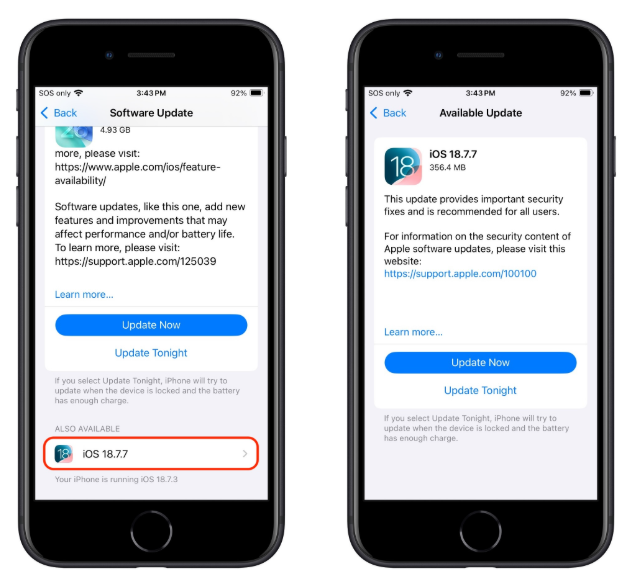
Apple’s latest security update, iOS 18.7.7, extends the DarkSword patch series to fix multiple high‑severity vulnerabilities that could allow remote code execution or privilege escalation on iPhones and iPads. The release is part of Apple’s ongoing effort to secure its mobile ecosystem.
The details:
- Apple releases patches addressing eight new DarkSword‑related CVEs.
- Vulnerabilities include memory corruption and sandbox escape bugs.
- All supported iOS devices receive the update automatically.
- Apple advises immediate installation for enterprise‑managed fleets.
Why it matters:
Enterprise mobile device management programs must enforce the update to maintain compliance and protect sensitive corporate data. Unpatched devices expose organizations to targeted attacks that can bypass traditional defenses.
Read the original sourceHUMAN FACTORS4️⃣ OWASP Announces Retirement of Meetup Platform

OWASP.ORG
OWASP has officially announced the retirement of its long‑standing Meetup platform, citing maintenance overhead and the availability of more modern community tools. The organization outlines steps for groups to relocate event listings, member communications, and archives.
The details:
- The legacy OWASP Meetup service will be decommissioned by Q4 2026.
- Communities are encouraged to migrate events to alternative platforms.
- OWASP provides a migration guide and timeline for transition.
- No loss of membership data is expected during the move.
Why it matters:
Security professionals rely on OWASP events for knowledge sharing and networking. A smooth migration ensures continued collaboration and minimizes disruption to community‑driven initiatives vital for staying current on threats.
Read the original sourceDATA BREACHES5️⃣ Hackers Exploit CVE‑2025‑55182 to Compromise 766 Next.js Sites

THEHACKERNEWS.COM
A large‑scale credential‑harvesting campaign leverages CVE‑2025‑55182, a flaw in the Next.js framework, to gain initial footholds on vulnerable web applications. Once inside, attackers exfiltrate database passwords, SSH keys, and cloud service credentials, amplifying the supply‑chain risk.
The details:
- The React2Shell vulnerability (CVE‑2025‑55182) enables remote code execution.
- Attackers harvested credentials, AWS keys, and API tokens from 766 hosts.
- Compromise spans multiple cloud providers and geographic regions.
- Cisco Talos attributes activity to the UAT‑10608 threat cluster.
Why it matters:
Enterprises deploying Next.js must prioritize patching to block this vector. The breach highlights the cascading impact of a single framework flaw on downstream services and the necessity of continuous dependency monitoring.
Read the original sourceAI SECURITY6️⃣ OpenClaw AI Agents Weaponized with Reverse Shells and Semantic Worms

BLOG.VIRUSTOTAL.COM
VirusTotal’s research reveals that adversaries are exploiting the rapidly expanding OpenClaw personal AI agent ecosystem to distribute malicious code. The campaign combines traditional reverse‑shell techniques with AI‑generated semantic worms, allowing automated, context‑aware infection chains.
The details:
- OpenClaw AI agents are being repurposed to deliver malware payloads.
- New techniques include reverse shells, semantic worms, and cognitive rootkits.
- VirusTotal observed a surge in AI‑driven malicious scripts in February 2026.
- Detection relies on behavioral analysis of AI tool usage patterns.
Why it matters:
The convergence of AI productivity tools and malware introduces a novel attack surface. Organizations must extend endpoint monitoring to include AI agent activity and enforce strict permissions on tool integrations.
Read the original sourceDATA BREACHES7️⃣ Student Loan Provider Breach Reveals 2.5 Million Records

THREATPOST.COM
A major U.S. student loan servicer suffered a breach that leaked millions of records, including Social Security numbers, loan balances, and repayment histories. The incident resulted from an unsecured Amazon S3 bucket left publicly readable.
The details:
- Personal and financial data of 2.5 M borrowers were exposed.
- Attack traced to a misconfigured cloud storage bucket.
- Regulators have opened investigations under data‑privacy statutes.
- Provider offers free credit monitoring to affected individuals.
Why it matters:
Financial institutions handling PII must enforce rigorous cloud configuration reviews. The breach underscores the reputational and regulatory fallout of data exposure, driving the need for proactive compliance programs.
Read the original sourceTHREAT INTELLIGENCE8️⃣ ISC Stormcast Highlights April 3 Threat Landscape

ISC.SANS.EDU
The Internet Storm Center’s daily podcast for April 3, 2026 summarizes emerging threats, including a spike in port‑scanning activity and the emergence of a novel Windows droppper. Analysts provide actionable guidance for defenders to mitigate the highlighted risks.
The details:
- Significant increase in SSH/Telnet scanning observed across North America.
- New malware droppers targeting unpatched Windows 10 systems were reported.
- Threat intelligence feeds show a rise in credential‑stuffing attempts.
- Recommendations include patched systems, MFA enforcement, and network throttling.
Why it matters:
Timely awareness of scanning trends and emergent malware informs defense prioritization. Implementing the suggested mitigations can reduce exposure to opportunistic attackers exploiting the same vectors.
Read the original sourceAI SECURITY9️⃣ Four Security Principles for Agentic AI Systems
AWS.AMAZON.COM
AWS outlines core security tenets for deploying agentic AI, where large language models interact with external tools. The blog stresses that traditional controls must extend to LLM‑driven actions, covering privilege management, supply‑chain integrity, and runtime monitoring.
The details:
- Enforce least‑privilege access for AI agents and their toolsets.
- Secure the supply chain of model weights and plugins.
- Implement robust session management to prevent hijacking.
- Continuously monitor for privilege‑escalation and code‑injection attempts.
Why it matters:
Enterprises integrating generative AI risk unintended authority escalation and supply‑chain attacks. Applying these principles safeguards critical workloads and aligns AI deployments with governance and compliance frameworks.
Read the original sourceDATA BREACHES🔟 Axios NPM Supply Chain Compromise Post‑Mortem
GITHUB.COM
The Axios team posted a detailed post‑mortem after a supply‑chain attack altered the popular HTTP client library. Attackers added covert logic that exfiltrated environment variables, impacting thousands of downstream projects before detection.
The details:
- Malicious code was injected into the Axios NPM package for several weeks.
- Affected projects experienced credential leaks and downstream payload delivery.
- Rapid community response removed the compromised versions and issued advisories.
- Lessons include rigorous maintainer verification and automated supply‑chain scanning.
Why it matters:
NPM packages are a critical component of modern software stacks; compromise can propagate widely. Strengthening maintainer controls and integrating continuous SBOM checks are essential to prevent similar incidents.
Stay vigilant and prioritize patches to protect your organization.
Member discussion